Home | Self-Storage Tips
Self-Storage Tips
- Create an 18” wide aisle down the middle of your unit. This way you can get to every box with minimal effort.
- Place items you are most likely to need at the front of the unit.
- You expose your items to moisture when you move in or open the door when it is raining. (See temperature inversion). You must return later and open door for several hours.
- Using sturdy boxes or plastic containers to store items:
- This allows for stacking at least four high.
- Stack heavier boxes on the bottom.
- Seal boxes with tape to keep out dust.
- Fill boxes or include space filler so boxes won’t crush.
- Pack heavier items in smaller boxes and lighter items in bigger boxes.
- Large and extra-large boxes generally require 2 people to pick-up /carry.
- Books should be stored in small or medium boxes which are sealed with tape. Books naturally attract mold.
- Do not store book boxes directly on the concrete floor.
- Label all boxes and containers so you can more efficiently retrieve items.
- Use bubble wrap, newspaper, blankets, and towels to fill empty space inside boxes to prevent items from breaking or chipping.
- Use blankets, sheets, or plastic covers made for storage to cover sofas and couches. Regular thick plastic holds moisture.
- Vacuum sofas and couches before storage. Small amounts of food will attract insects and mice.
- Cover mattresses with plastic covers before moving. If dropped or dragged the mattresses won’t get dirty.
- Seal the end of mattress cover before storing with tape.
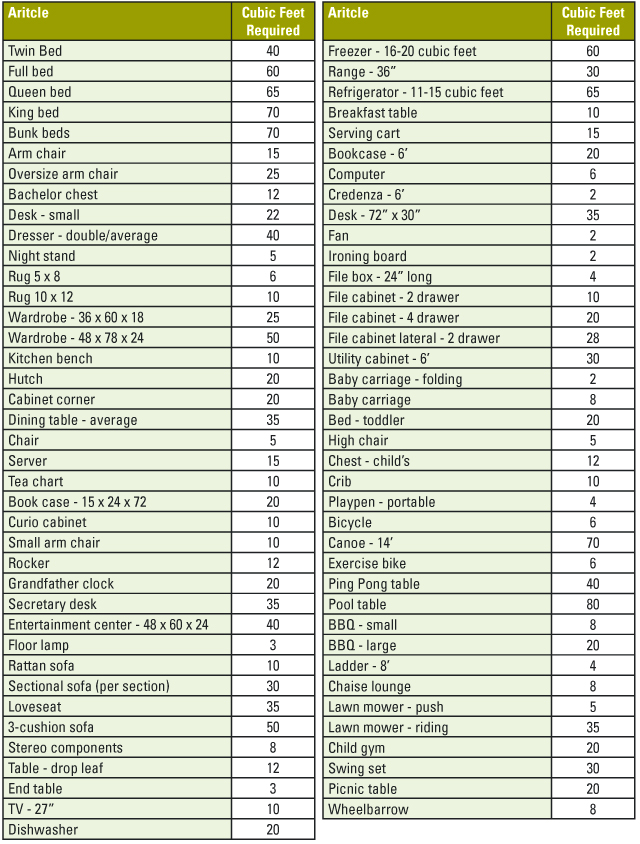
- Disassemble lamps, chairs, tables, etc. so they take up less room in storage. (See “How Much Storage Do I Really Need?” to help determine how big a unit you need.)
- If you are concerned about items being on the cement floor, use pallets.
- Mirrors and glass should always be wrapped in a blanket and stored vertically.
- Clean appliances and empty refrigerators. No one likes moving into a new space with “old” dirt.
- To avoid late payment, sign up for automatic credit card deduction.